
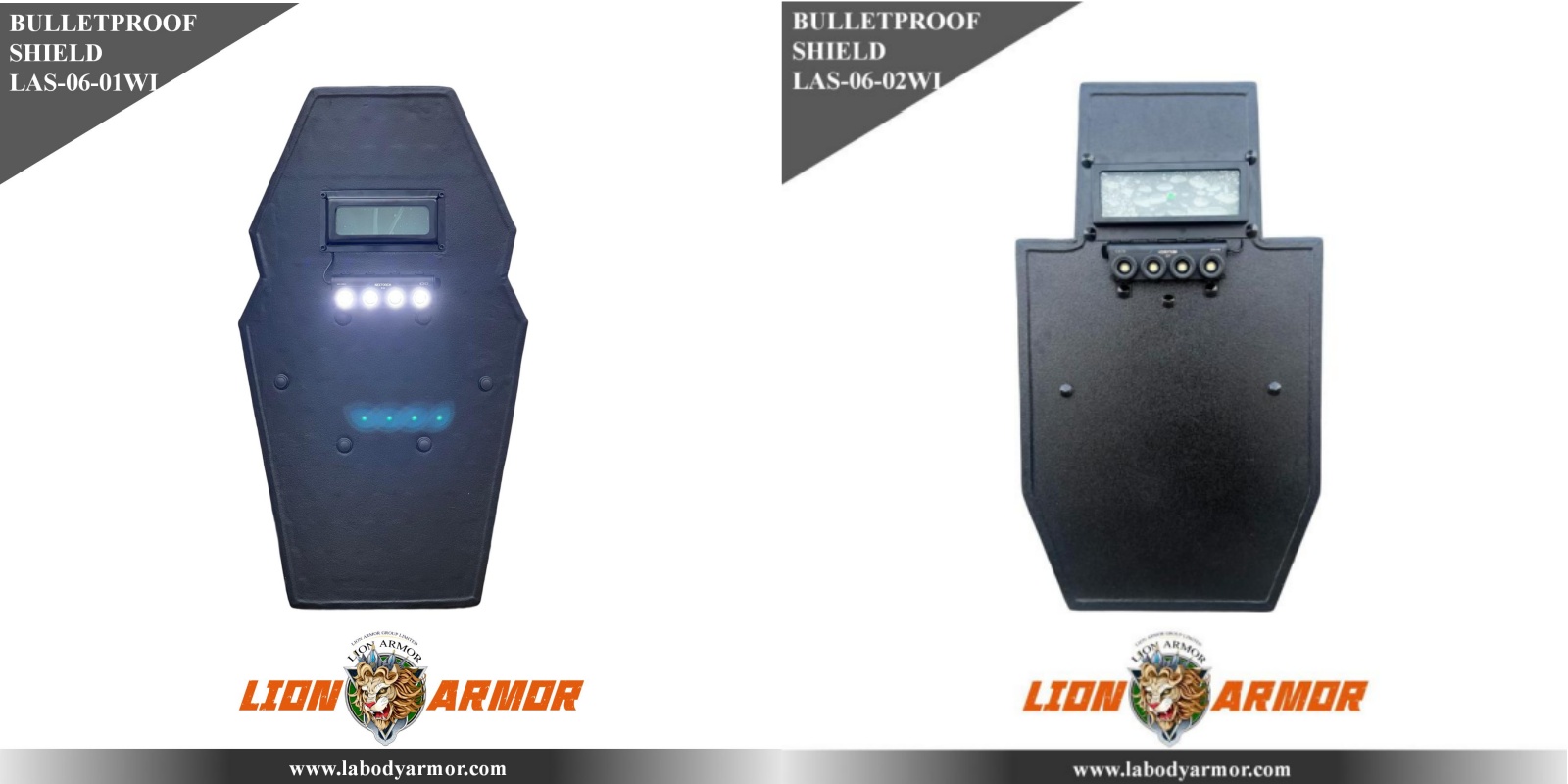
A ballistic shield is a core piece of protective gear for security and law enforcement personnel, and its protective capability directly determines the user’s survival probability in high-risk scenarios. So, what exactly can this seemingly sturdy “mobile barrier” stop?
First and foremost, ballistic shields can effectively withstand handgun bullets. Commonly available Level IIIA shields on the market can easily fend off pistol ammunitions such as 9mm Parabellum rounds and .44 Magnum rounds, which are the primary threats in security patrols and close-quarters confrontations.
Second, they can block low-velocity rifle bullets and shotgun slugs. When paired with hard armor inserts, some reinforced shields can weaken or intercept certain low-powered rifle bullets, reducing the penetration damage caused by the projectiles.
In addition, ballistic shields are capable of withstanding attacks from shrapnel, stones, glass bottles and other fragmentary and blunt weapons. In riot or explosion scenarios, they provide users with a reliable physical line of defense.
It should be noted, however, that ballistic shields are not “omnipotent”. Conventional shields can hardly fully withstand high-powered rifle bullets or armor-piercing rounds. Choosing the right protection level is the key to maximizing the shield’s effectiveness.
Post time: Jan-16-2026